Acne & rosacea care
Acne and rosacea are different conditions that need diagnosis-specific treatment. Follow-up assesses response, tolerance and whether medicines or procedures should change.
Treatments in this specialty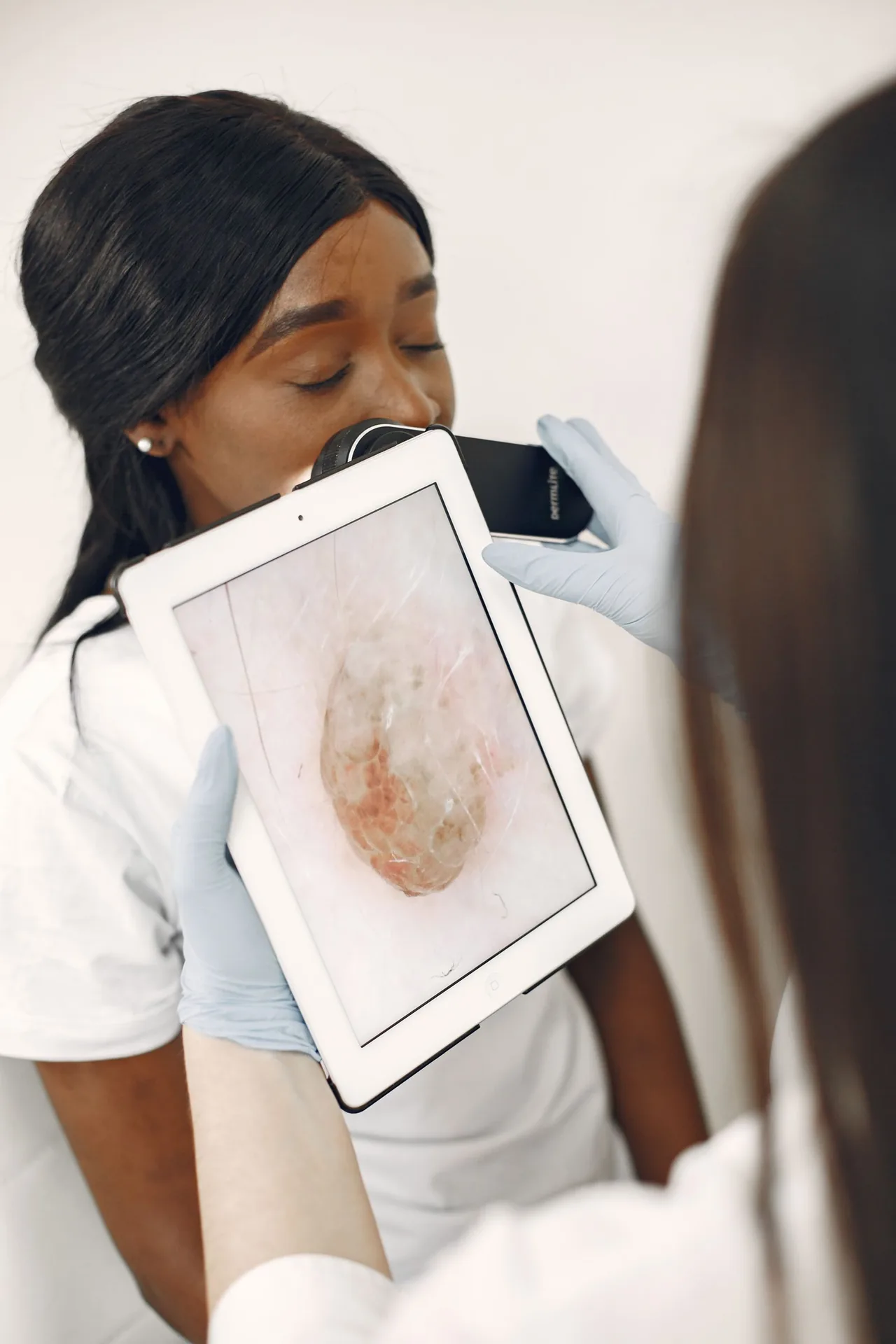
Procedure guides
Times are planning guides, not national averages or guaranteed schedules. They reflect published provider examples and patient guidance. The treating team confirms the individual plan, time needed near the clinic and fitness to travel. Waiting lists are not included.
Dermoscopy of skin lesions
Magnified examination of skin lesions helps a dermatologist evaluate pigment and vascular patterns. Suspicious lesions may need excision and histopathology; dermoscopy alone does not establish every diagnosis.
- Time
- Depends on lesion count and examination scope
- Appointments
- 1 examination; biopsy or monitoring if needed
Skin biopsy
Tissue sampling for microscopic diagnosis.
- Time
- The technique and site determine appointment length; pathology reporting is separate.
- Appointments
- 1 test attendance + results review
Can’t find your treatment?
Tell us the specialty or service you need. We can clarify the next coordination step.
Clinical terms
Use these clinical terms when discussing a referral or looking for a provider. Focused care areas may sit within a broader medical specialty.
- Acne & rosacea care
- Akne- und Rosazea-BehandlungGermanLéčba akné a rosaceyCzech
Treatments & services
Explore specific procedures, investigations and care services. The clinical team confirms which options fit the individual case.
Acne treatment
Topical or systemic treatment according to severity.
Rosacea management
Treatment of facial inflammation and redness.
Dermoscopy
Magnified assessment of skin lesions.
Skin biopsy
Tissue sampling for microscopic diagnosis.
Can’t find your treatment?
Tell us the specialty or service you need. We can clarify the next coordination step.
Planning your care

Ask the treating service for a written plan. Appointment numbers and time away depend on the procedure, results and individual needs.
- What are the realistic goals, alternatives, risks and qualifications of the treating professional?
- Does the plan involve an operation or a series of outpatient treatments, and which reviews are included?
- Ask about wound care, recovery restrictions, management of complications and the basis of any revision fees.
Sources & availability
These references provide clinical background. The guide is not a confirmed service menu for every centre or both countries, and cited organisations are not necessarily RAUQ partners. Confirm eligibility, availability and international patient access with the centre.
Guide content and sources checked 29 October 2026.