Rehabilitation & recovery
Physiotherapy, rehabilitation programmes and postoperative recovery share a focus on function and daily life. The programme may combine different therapies, with the setting and intensity matched to assessed needs.
Treatments in this specialty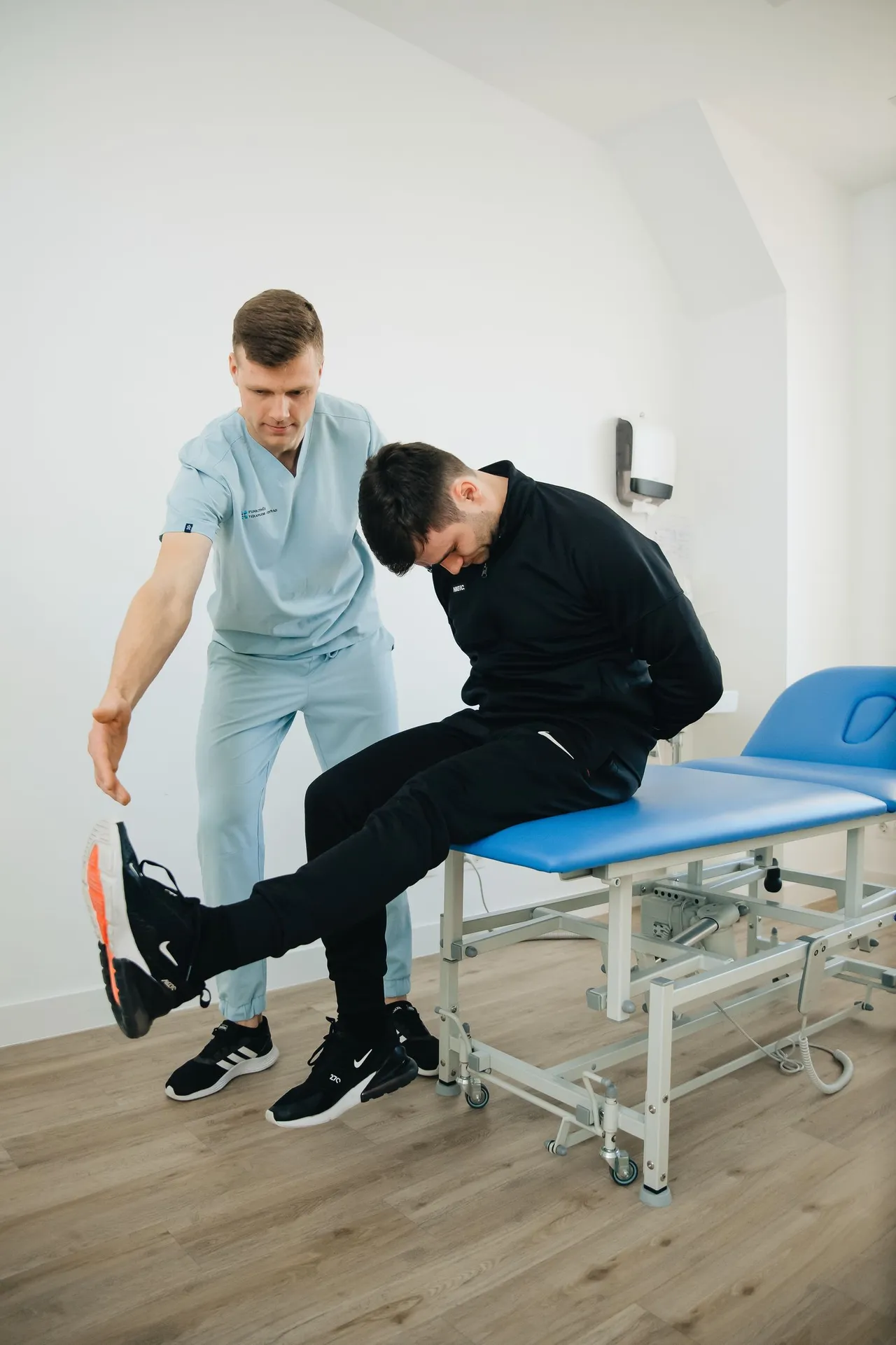
Procedure guides
Times are planning guides, not national averages or guaranteed schedules. They reflect published provider examples and patient guidance. The treating team confirms the individual plan, time needed near the clinic and fitness to travel. Waiting lists are not included.
Musculoskeletal physiotherapy
A physiotherapist assesses movement, strength and daily function, then plans exercises and other appropriate techniques for musculoskeletal problems or postoperative recovery. Treatment follows the diagnosis and surgical restrictions where relevant.
- Time
- Repeated sessions; programme length varies
- Appointments
- Assessment + prescribed therapy + reassessment
Gait retraining
Improving walking pattern and safety.
- Time
- Session length and course duration follow assessed walking goals.
- Appointments
- 1 assessment + a prescribed course
Balance rehabilitation
Training postural control.
- Time
- The programme depends on the cause of imbalance and fall risk.
- Appointments
- 1 assessment + a prescribed course
Hand therapy
Restoring grip, dexterity and movement.
- Time
- Therapy follows tissue-healing stages and practical hand-use goals.
- Appointments
- 1 assessment + a prescribed course
Occupational therapy
Adapting everyday tasks and environments.
- Time
- Assessment and follow-up depend on the tasks and environment being addressed.
- Appointments
- 1 assessment + a prescribed course
Speech and language therapy
Communication rehabilitation.
- Time
- Frequency and duration depend on the communication problem and assessed goals.
- Appointments
- 1 assessment + a prescribed course
Dysphagia rehabilitation
Assessment and therapy for swallowing difficulty.
- Time
- Assessment may require clinical examination and a separate instrumental test.
- Appointments
- 1 assessment + a prescribed course
Vestibular rehabilitation
Exercises for selected balance disorders.
- Time
- A tailored exercise course with review; there is no single standard session count.
- Appointments
- 1 assessment + a prescribed course
Lymphoedema therapy
Compression, exercise and skin care.
- Time
- NHS guidance describes an intensive phase followed by ongoing maintenance.
- Appointments
- 1 assessment + a prescribed course
Pelvic-floor physiotherapy
Muscle training for continence and support.
- Time
- A supervised exercise programme is reviewed over time; duration depends on the indication.
- Appointments
- 1 assessment + a prescribed course
Can’t find your treatment?
Tell us the specialty or service you need. We can clarify the next coordination step.
Clinical terms
Use these clinical terms when discussing a referral or looking for a provider. Focused care areas may sit within a broader medical specialty.
- Physiotherapy & rehabilitation
- Physiotherapie / RehabilitationsmedizinGermanFyzioterapie / rehabilitační lékařstvíCzech
- Rehabilitation centers
- RehabilitationszentrumGermanRehabilitační centrumCzech
- Postoperative recovery
- Postoperative Nachsorge / RekonvaleszenzGermanPooperační péče / rekonvalescenceCzech
Treatments & services
Explore specific procedures, investigations and care services. The clinical team confirms which options fit the individual case.
Musculoskeletal physiotherapy assessment
Movement and function testing.
Therapeutic exercise
Individually prescribed mobility and strengthening.
Gait retraining
Improving walking pattern and safety.
Balance rehabilitation
Training postural control.
Manual therapy
Clinician-applied joint and soft-tissue techniques.
Aquatic physiotherapy
Supervised therapeutic exercise in water.
Pelvic-floor physiotherapy
Muscle training for continence and support.
Respiratory physiotherapy
Breathing and airway-clearance techniques.
Stroke rehabilitation
Retraining movement and everyday activities.
Parkinson rehabilitation
Movement, balance and cueing exercises.
Multiple sclerosis rehabilitation
Function and fatigue management.
Vestibular rehabilitation
Exercises for selected balance disorders.
Lymphoedema therapy
Compression, exercise and skin care.
Hand therapy
Restoring grip, dexterity and movement.
Rehabilitation after hip replacement
Walking and strength recovery.
Rehabilitation after knee replacement
Range of motion and walking.
ACL rehabilitation
Staged recovery after ligament injury or surgery.
Occupational therapy
Adapting everyday tasks and environments.
Speech and language therapy
Communication rehabilitation.
Dysphagia rehabilitation
Assessment and therapy for swallowing difficulty.
Cardiac rehabilitation
Supervised recovery and risk reduction.
Pulmonary rehabilitation
Supervised exercise and breathing education.
Geriatric rehabilitation
Recovery of independence after illness or surgery.
Paediatric rehabilitation
Development, mobility and daily-function therapy.
Interdisciplinary pain rehabilitation
Graded activity and coping skills.
Amputee rehabilitation
Residual-limb care, mobility and prosthesis training.
Postoperative surgical review
Wound, symptoms and recovery milestones.
Wound assessment and dressing
Monitoring tissue healing.
Suture or staple removal
Timing according to the surgical wound.
Analgesic medication review
Benefit, side effects and safe prescribing.
Early postoperative mobilisation
Supervised return to movement.
Postoperative thrombosis prevention review
Mobility and prescribed prophylaxis.
Clinical dietetic consultation
Assessment of intake and nutritional needs.
Bariatric nutrition follow-up
Intake, supplements and deficiency monitoring.
Stoma care education
Appliance use, skin care and troubleshooting.
Urinary catheter care
Hygiene, monitoring and removal planning.
Postoperative scar rehabilitation
Mobility and scar-care advice after healing.
Recovery discharge planning
Rehabilitation, home support and clinician travel advice.
Can’t find your treatment?
Tell us the specialty or service you need. We can clarify the next coordination step.
Planning your care

Ask the treating service for a written plan. Appointment numbers and time away depend on the procedure, results and individual needs.
- What are the assessed rehabilitation goals, and is the proposed setting inpatient, outpatient or a medical spa?
- Request the number and length of individual and group sessions, disciplines involved, rest days and review points.
- What nursing support, accessibility, companion arrangements and home programme are included?
Sources & availability
These references provide clinical background. The guide is not a confirmed service menu for every centre or both countries, and cited organisations are not necessarily RAUQ partners. Confirm eligibility, availability and international patient access with the centre.
Guide content and sources checked 29 October 2026.